
Short Answer: No, It's Not Just a Bigger Version of Your Garage Door
Commercial and warehouse overhead doors are built on heavier-duty track, use different spring and cable systems rated for far more open-close cycles, and often carry different wind-load and panel requirements than the door on your house. If you've got a detached shop, a converted garage that now runs a small business, or a metal building out back, that door is doing a different job than the one protecting your car, and it needs to be treated differently. Settle the argument, then keep reading so you both know why.
What Actually Makes Them Different
Construction and Panel Strength
A standard residential door is built for maybe a handful of cycles a day and moderate wind exposure. Commercial doors — especially on warehouses, shops, or fleet garages — are built thicker, often with heavier gauge steel, reinforced struts, and track designed to handle doors that are wider, taller, or heavier. Some commercial settings use higher-cycle rolling steel or sectional doors specifically because they're opening and closing dozens of times a day instead of two or three.
Springs and Cables Rated for More Work
Residential torsion springs are typically rated for around 10,000 cycles — fine for a household that opens the garage a couple times a day for years. A door that opens 20, 30, or 50 times a day burns through that cycle count fast. Commercial installations use higher-cycle springs (sometimes rated well above 20,000–50,000 cycles) specifically because the math doesn't work otherwise. Put a residential-grade spring on a high-traffic commercial door and you'll be replacing it constantly, or worse, dealing with a snapped spring under load.
Opener Duty Cycle
Residential openers are built for intermittent use. Commercial openers are built for continuous or frequent duty, often with more powerful motors, steel gears instead of plastic, and safety features scaled to a bigger, heavier door. A residential opener on a commercial-use door is a common point of failure — it's simply not built for the workload.
Wind Load and Panel Ratings
Here in North Florida, wind-load rules matter for any garage door, residential or commercial, because of hurricane season. But commercial doors on larger spans — think warehouse bays or shop doors wider than a typical two-car garage — have their own engineering considerations for wind pressure across that larger surface area. A wider door catches more wind, which means the reinforcement, track anchoring, and panel rating all have to scale up accordingly. This isn't optional in storm-prone areas; it's the difference between a door that holds up during a tropical system and one that buckles.
Maintenance Looks Different Too
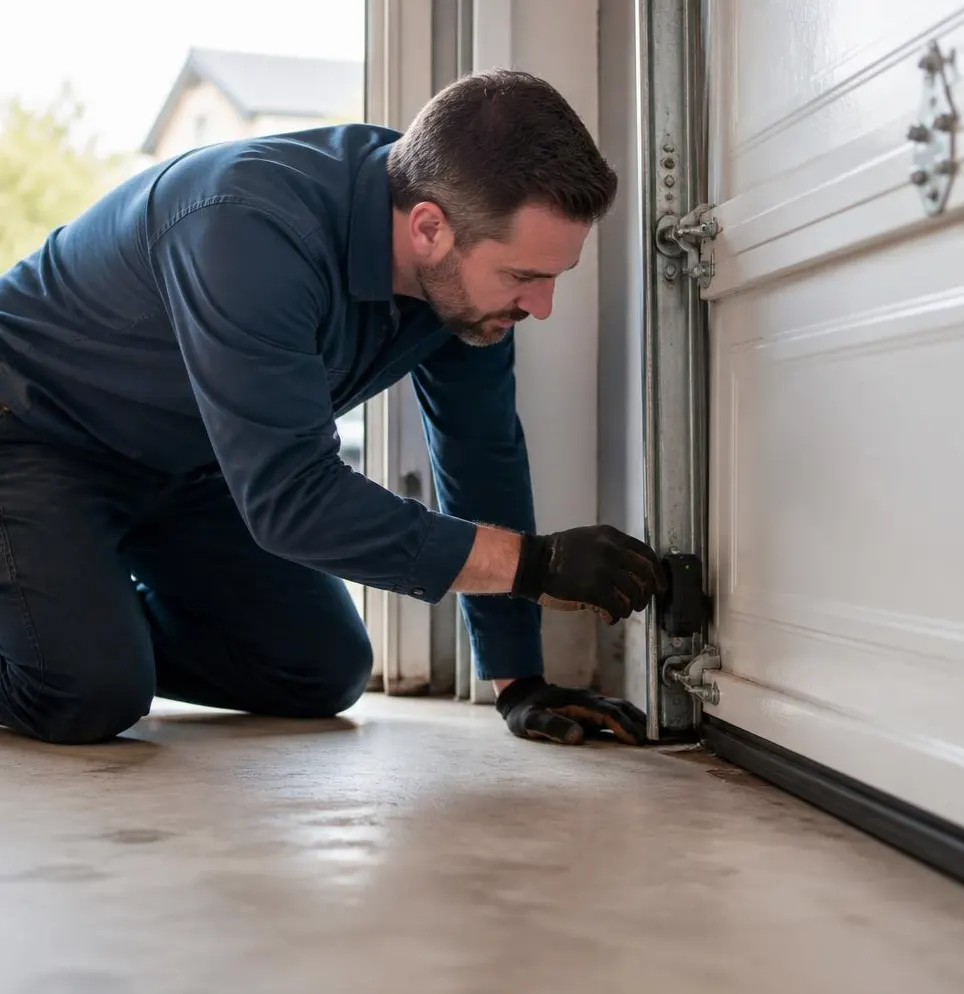
Because commercial doors cycle more often and often sit in less climate-controlled spaces (think metal shops, detached garages used as workspaces, or outbuildings), they need more frequent attention, not less.
- Lubrication more often. High-cycle doors need rollers, hinges, and springs lubricated more frequently than a residential door that only moves twice a day.
- Hardware inspection on a shorter interval. Bolts, brackets, and roller tracks loosen faster under heavier use. A once-a-year check that's fine for a house door isn't enough for a door that's constantly moving.
- Cable and spring checks. High-cycle springs still wear out — they just last longer per cycle. Track the approximate cycle count if you can, and don't wait for a dramatic failure.
- Weatherstripping and seals. Afternoon downpours and humidity swell wood and warp seals on any door, but outbuildings and detached shops often get less airflow and more trapped moisture, which accelerates rust on hardware and rot on wood components.
- Panel and track rust checks. If the structure is anywhere near enough to pick up salt air, or just sits in high humidity most of the year, steel components corrode faster. Commercial doors with more exposed hardware have more surface area for that to happen.
Where This Argument Usually Starts
Most of the time, this isn't a theoretical debate — it's about a specific door. Maybe one of you converted part of the garage into a workshop and now it opens multiple times a day for deliveries or projects. Maybe there's a detached outbuilding with a roll-up door that's been treated like a regular garage door for years. Maybe it's an actual small business running out of a converted space. In all of those cases, the usage pattern has outgrown a residential-grade door, even if the door itself still looks fine.
The giveaway signs: springs failing more often than they should, the opener straining or overheating, hardware working loose faster than expected, or a door that feels noticeably heavier and harder to lift manually than when it was installed. Those aren't signs of a bad door — they're signs of the wrong door, or the wrong maintenance schedule, for the job it's actually doing.
When to Call Tallahassee Garage Door Pro
If you've got a door that's cycling more than a typical household door, showing rust or hardware wear faster than expected, or you're just not sure whether what you have is rated for the use it's getting, that's worth a real assessment rather than a guess. We handle both garage door installation for properly rated replacements and ongoing garage door maintenance scheduled around actual usage, not just the calendar. If a spring's already showing signs of fatigue or an opener's straining under the workload, we'll tell you straight whether it needs replacing or just a tune-up — no upsell, just what the door actually needs.
If you're in Tallahassee, Midway, Havana, Quincy, Crawfordville, Monticello, Woodville, or Centerville and you've got a heavy-use door that needs a second opinion, give Tallahassee Garage Door Pro a call. We'll settle the argument for you.