
You hit the opener button and the door shudders halfway up, groans, then keeps going like nothing happened. Or maybe it's the opposite — it closes, but you notice daylight along the bottom edge where the seal used to sit flush. After a summer of afternoon downpours and thick humidity, these little glitches are common, and most of them are easy to catch before they turn into a stuck door or a stranded car.
What a Long Humid Season Leaves Behind
Months of heat, moisture, and sudden storms do real things to a garage door. Metal tracks and hinges can pick up surface rust, especially if your garage sits closer to the coast where salt air speeds things along. Wood-look steel doors and wooden trim can swell slightly from humidity, which throws off alignment just enough to cause rubbing or binding. Rollers that were rolling smoothly in spring can start to squeal once grit and moisture work into the bearings. None of this is dramatic on its own, but it adds up, and it's exactly what a seasonal check is for.
Tools You'll Need
- Work gloves
- A flashlight
- An adjustable wrench or socket set
- Silicone-based garage door lubricant spray (not WD-40 or household oil, which attract dust)
- A soft cloth
- A step stool or short ladder
The 20-Minute Routine
- Look over the tracks. With the door closed, run your flashlight along both tracks. You're checking for rust spots, dents, or gaps where the track has pulled away from the wall bracket. Wipe off any visible grime with the cloth.
- Test the balance. Pull the emergency release cord to disconnect the opener, then lift the door by hand to about waist height and let go. A properly balanced door should stay put. If it drifts up or slams down, the springs are compensating incorrectly for the door's weight — note it, but don't adjust anything yourself.
- Check the weatherstripping. Run your hand along the rubber seal at the bottom of the door and the vinyl strips along the sides. Look for cracking, flattening, or sections that have pulled loose. This seal is your main defense against wind-driven rain during storms, so gaps here matter more than they look.
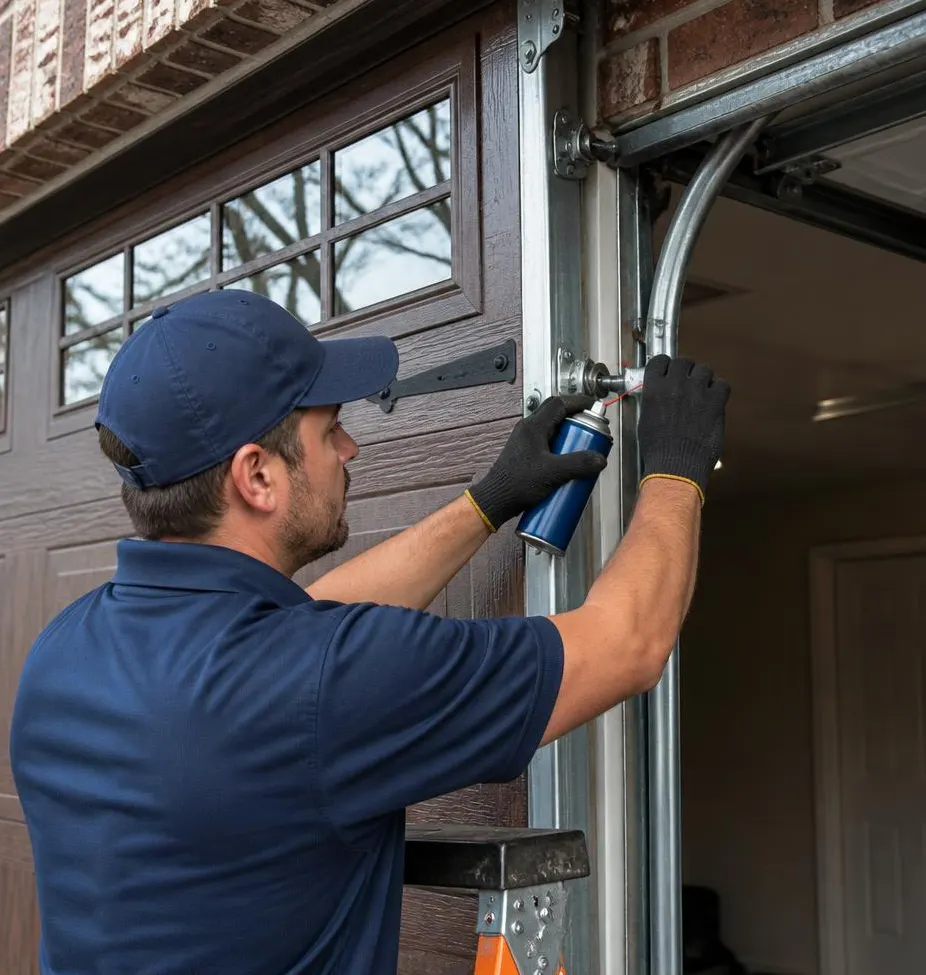
- Lubricate the moving metal parts. Spray the hinges, the rollers' metal stems (skip nylon roller wheels, which don't need it), and the tracks themselves. Wipe away any excess so it doesn't collect dust.
- Tighten visible hardware. Vibration from regular use loosens bolts on the track brackets and the hinges over time. Go over them with your wrench, snugging anything that's wiggled loose. Don't force anything that feels stuck.
- Test the auto-reverse safety feature. Reconnect the opener, close the door, and place a block of wood or a roll of paper towels in its path. The door should reverse on contact. Separately, wave your hand in front of the photo-eye sensors near the bottom of the tracks while the door is closing — it should stop and reverse without touching anything.
- Do a visual-only check of the springs. Look at the torsion spring above the door (or the two stretched springs on either side of the track for older setups). You're looking for visible gaps in the coils, rust pitting, or a spring that looks stretched compared to its pair. Do not touch, adjust, or try to tighten anything here.
Where DIY Stops and a Technician Starts
Everything above — tracks, lubrication, hardware, seals, and basic testing — is safe and reasonable for a homeowner to handle. Springs are a different story. They're under enough tension to cause serious injury if they let go while you're working near them, and adjusting spring tension or replacing a spring requires the right bars and technique. The same goes for cables, the opener's internal gears, and anything involving the high-tension side of the system. If your balance test showed a problem, if a spring looked uneven or rusted through, or if the door makes a loud bang or suddenly feels heavier to lift by hand, stop there and call someone who does this for a living.
When to Call Tallahassee Garage Door Pro
If your seasonal check turns up a spring that looks worn, a door that won't stay balanced, or an opener that's grinding instead of running smooth, that's where our Garage Door Maintenance visit earns its keep — we inspect the whole system, including the parts you shouldn't touch, and catch wear before it becomes a Saturday-morning emergency. If a spring has already failed or the door won't move at all, our Spring Replacement service gets you back in operation safely, with the correct spring for your door's weight and wind-load rating. Either way, we show up, diagnose it straight, and fix what's actually wrong.
If you're in Tallahassee, Midway, Havana, Quincy, Crawfordville, Monticello, Woodville, or Centerville and your garage door needs a second opinion, give Tallahassee Garage Door Pro a call — we'll get it running right before storm season catches you off guard.